
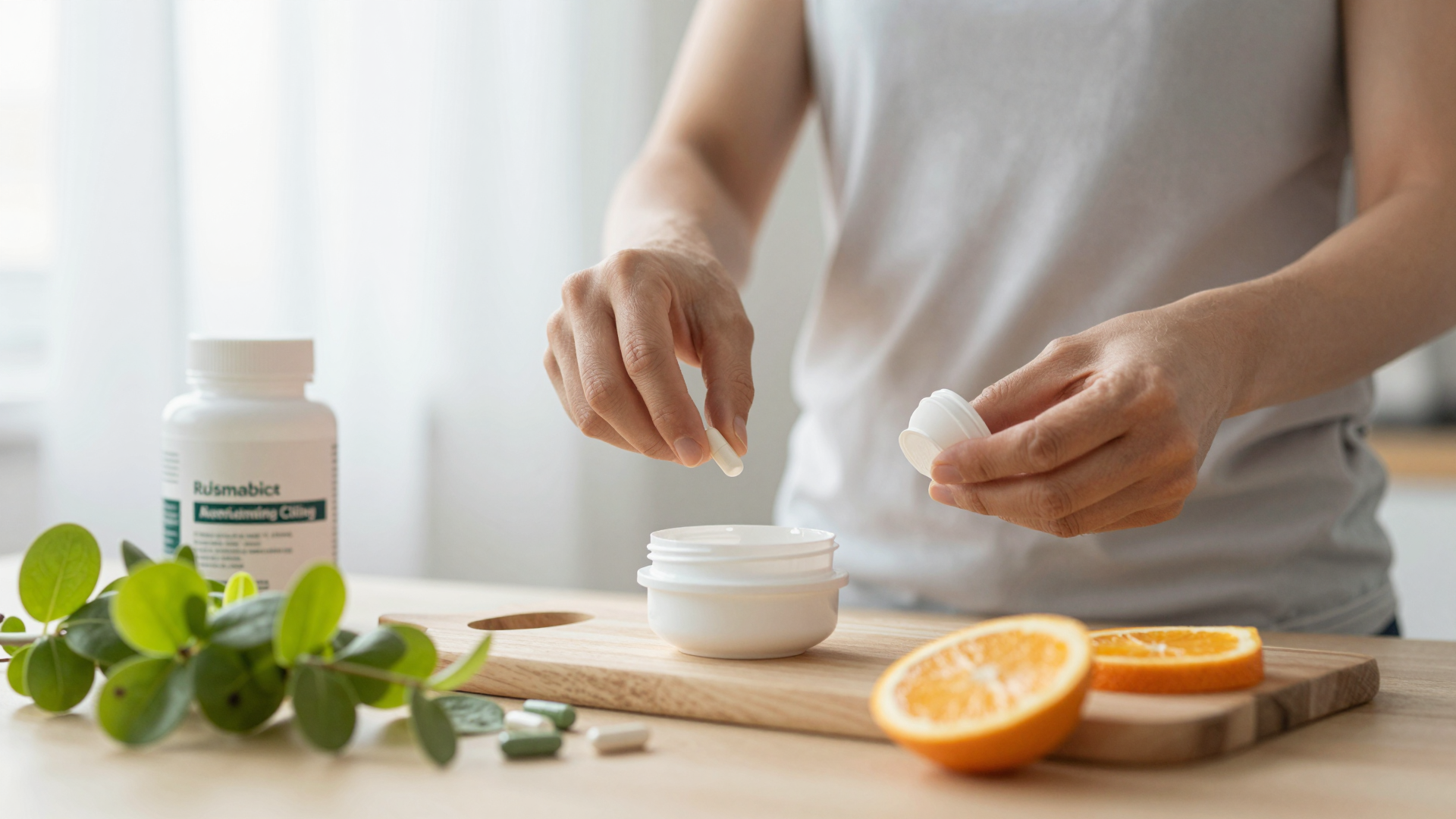
When stress hijacks your sleep, the effects often spill into daytime mood, motivation, and cognitive performance—especially if you’re stuck in a loop of racing thoughts at night and low resilience the next day. One supplement that’s frequently discussed for stress-driven insomnia and low mood is 5-hydroxytryptophan (5-HTP), a serotonin precursor. The key is using it with evidence-based expectations, appropriate dosing, and strict serotonergic safety—because “natural” does not mean “risk-free,” particularly when combined with antidepressants or other serotonin-raising agents (Shaw et al., 2002; Food and Drug Administration, 2006).
Contents
- 1 Contents
- 1.1 What 5-HTP is (and how it may affect sleep, mood, and cognition)
- 1.2 Clinical evidence: stress-driven sleep disruption and low mood
- 1.3 Dosing protocols: practical, evidence-informed options
- 1.4 Serotonergic safety: interactions, serotonin syndrome risk, and who should avoid it
- 1.5 Stacking 5-HTP with sleep and stress foundations (diet + digital tools)
- 1.6 Conclusion
- 1.7 References
Contents
- What 5-HTP is (and how it may affect sleep, mood, and cognition)
- Clinical evidence: stress-driven sleep disruption and low mood
- Dosing protocols: practical, evidence-informed options
- Serotonergic safety: interactions, serotonin syndrome risk, and who should avoid it
- Stacking 5-HTP with sleep and stress foundations (diet + digital tools)
- Conclusion
- References
What 5-HTP is (and how it may affect sleep, mood, and cognition)
5-HTP is an intermediate metabolite between the dietary amino acid tryptophan and serotonin (5-HT). In humans, 5-HTP can increase serotonin synthesis because it is converted to serotonin by aromatic L-amino acid decarboxylase; unlike tryptophan, 5-HTP is not as tightly regulated by the initial rate-limiting step of tryptophan hydroxylase (Birdsall, 1998). Serotonin influences mood regulation and contributes to sleep-wake physiology, and serotonin is also a precursor to melatonin—one reason 5-HTP is often positioned for sleep support (Birdsall, 1998; Shaw et al., 2002).
Clinically, the rationale for 5-HTP in stress-related sleep disruption is that chronic stress can destabilize sleep architecture and worsen insomnia symptoms via hyperarousal pathways, which are tightly linked to mood symptoms (Kalmbach et al., 2018). While 5-HTP is not a stand-alone treatment for insomnia or depression, serotonergic support may be relevant for some people—particularly when stress, sleep fragmentation, and low mood co-occur (Shaw et al., 2002; Kalmbach et al., 2018).
Clinical evidence: stress-driven sleep disruption and low mood
Low mood / depressive symptoms: A systematic review assessing tryptophan and 5-HTP in depression found that available trials suggested potential benefit, but the authors emphasized that many studies were small and methodologically limited, making certainty low to moderate depending on the outcome (Shaw et al., 2002). This means 5-HTP may help some people with low mood, but it should not be treated as equivalent to first-line, evidence-based depression care (e.g., psychotherapy, SSRIs/SNRIs when indicated) (Shaw et al., 2002).
Stress-driven sleep disruption: Direct high-quality trials of 5-HTP specifically for stress-induced insomnia are limited. However, insomnia is strongly linked with stress physiology and next-day affective dysregulation; improvements in sleep continuity often improve mood and perceived stress reactivity (Kalmbach et al., 2018). Since serotonin signaling is involved in sleep-wake regulation and melatonin synthesis, 5-HTP remains biologically plausible for some sleep complaints—especially those with concurrent low mood—yet the evidence base is not as robust as for CBT-I (cognitive behavioral therapy for insomnia) (Birdsall, 1998; Kalmbach et al., 2018).
Why expectations matter: In supplement research, effect sizes can be modest and vary by baseline symptom severity, comorbid anxiety/depression, and concurrent medications. If you’re dealing with persistent insomnia or depressive symptoms, consider 5-HTP as a possible adjunct—not a replacement—for clinically supported interventions and medical evaluation (Shaw et al., 2002; Kalmbach et al., 2018).
Evidence-based takeaway for StrongerMinded readers
5-HTP has some clinical support for depressive symptoms, but the overall evidence is constrained by study quality; evidence for stress-driven insomnia is more indirect (Shaw et al., 2002; Kalmbach et al., 2018). If you trial it, do so with a clear safety screen and a structured tracking plan (sleep latency, awakenings, next-day mood, and side effects).
Dosing protocols: practical, evidence-informed options
5-HTP dosing in studies and clinical practice varies widely. Because adverse effects (especially nausea and vivid dreams) can be dose-related, many clinicians use a “start low, go slow” approach (Birdsall, 1998; Shaw et al., 2002). Typical supplemental dosing ranges often fall between 50–300 mg/day, sometimes divided, depending on the target symptom and tolerance (Birdsall, 1998).
- For stress-driven sleep disruption (sleep onset): Consider 50 mg 30–60 minutes before bed for 3–4 nights, then increase to 100 mg if needed and tolerated (Birdsall, 1998).
- For fragmented sleep with low mood (combined target): Consider 50–100 mg in the evening; some people use a split dose (e.g., 50 mg late afternoon + 50 mg before bed) to support evening mood stability and sleep onset, but split dosing may increase the chance of GI side effects in sensitive users (Birdsall, 1998).
- Upper range (only with clinician oversight): Doses approaching 200–300 mg/day may be used in some mood-focused protocols, but interaction risk rises substantially when combined with serotonergic agents (Shaw et al., 2002; Boyer & Shannon, 2005).
How long to trial: For sleep, a practical evaluation window is 7–14 nights with objective-ish metrics (time to fall asleep, number of awakenings, total sleep time, next-day sleepiness). For mood, consider 2–6 weeks while tracking depressive symptoms and anxiety, but discontinue earlier if agitation, sweating, tremor, diarrhea, confusion, or rapid heart rate develops—possible signs of serotonergic toxicity (Boyer & Shannon, 2005).
Common side effects to watch
- Nausea, diarrhea, abdominal discomfort (dose-related GI effects are frequently reported with serotonergic supplements) (Birdsall, 1998).
- Vivid dreams or changes in sleep experience, which may be undesirable if you already have stress-related nightmares (Birdsall, 1998).
- Daytime sleepiness if the dose is too high or timing is too late (Birdsall, 1998).
Serotonergic safety: interactions, serotonin syndrome risk, and who should avoid it
Do not combine 5-HTP with serotonergic medications without clinician approval. 5-HTP can increase serotonin synthesis, and combining multiple serotonin-elevating agents can raise the risk of serotonin syndrome, a potentially life-threatening toxidrome characterized by neuromuscular abnormalities, autonomic instability, and altered mental status (Boyer & Shannon, 2005). This risk is most relevant if 5-HTP is combined with SSRIs/SNRIs, MAOIs, certain migraine medications (triptans), some opioids (e.g., tramadol), linezolid, dextromethorphan, lithium, or St. John’s wort (Boyer & Shannon, 2005).
Special caution: eosinophilia-myalgia syndrome (EMS) history and supplement purity. Past outbreaks of EMS were associated with contaminated tryptophan supplements; while 5-HTP is distinct, quality control and contamination risk are ongoing supplement-industry concerns, so choosing third-party tested products matters (Food and Drug Administration, 2006). From a safety standpoint, if you have a history of unexplained eosinophilia, severe myalgias, or prior EMS-like symptoms, consult a clinician before using serotonin precursors (Food and Drug Administration, 2006).
Who should avoid (or only use with medical supervision)
- Anyone taking antidepressants or other serotonergic drugs due to serotonin syndrome risk (Boyer & Shannon, 2005).
- Bipolar spectrum disorder (history of mania/hypomania): serotonergic agents may worsen agitation or contribute to mood destabilization in vulnerable individuals; medication and supplement decisions should be clinician-guided (Baldessarini et al., 2010).
- Pregnancy or breastfeeding: safety data are insufficient for routine use; rely on clinician guidance (Shaw et al., 2002).
- People with significant liver disease or complex medical conditions: use only with clinician oversight due to limited targeted safety data (Birdsall, 1998).
Red-flag symptoms (stop and seek urgent care): agitation, confusion, fever, heavy sweating, tremor, muscle rigidity, clonus, diarrhea, or rapid heart rate—especially if taking any serotonergic medication (Boyer & Shannon, 2005).
Stacking 5-HTP with sleep and stress foundations (diet + digital tools)
Supplements tend to work best when the fundamentals that govern stress arousal and sleep pressure are addressed. For insomnia and stress reactivity, CBT-I is a first-line intervention with robust evidence for improving insomnia severity and sleep efficiency (Trauer et al., 2015). If your sleep is stress-fragmented, pairing a careful 5-HTP trial with evidence-based behavioral strategies typically produces more reliable outcomes than supplements alone (Trauer et al., 2015; Kalmbach et al., 2018).
Diet supports that matter for mood and sleep physiology
- Omega-3 fatty acids (EPA/DHA): Meta-analytic data suggest omega-3s—particularly higher EPA formulations—may reduce depressive symptoms in some populations, which can indirectly support sleep by improving mood stability (Mocking et al., 2016).
- Correcting nutrient deficiencies: Low vitamin D status has been associated with depression in meta-analyses, and supplementation may improve depressive symptoms in some groups, especially when deficiency is present (Anglin et al., 2013). Deficiency correction is a more evidence-grounded “mood supplement” strategy than stacking multiple serotonin precursors.
- Magnesium (when intake is low): Systematic review evidence suggests magnesium supplementation may improve subjective anxiety in some samples, which can reduce cognitive hyperarousal at bedtime (Boyle et al., 2017).
Digital tools to improve adherence and outcomes
Digital CBT-I programs and structured sleep diaries can improve consistency and help you detect whether 5-HTP is truly helping or whether changes are driven by sleep scheduling, stimulus control, or reduced evening rumination (Trauer et al., 2015). Mindfulness-based interventions also have evidence for reducing stress and improving mental well-being, which may reduce sleep-interfering arousal in some individuals (Khoury et al., 2015).
- Track: sleep latency, awakenings, total sleep time, next-day mood (0–10), and anxiety (0–10).
- Keep one variable stable: change only one thing at a time (e.g., add 5-HTP but keep caffeine timing constant) to interpret results.
- Use evidence-based app content: CBT-I or mindfulness programs with structured lessons and homework are more likely to help than passive sleep sounds alone (Trauer et al., 2015; Khoury et al., 2015).
Conclusion
5-HTP is a serotonin precursor with some clinical evidence for depressive symptoms, and a biologically plausible—but less directly proven—role in stress-driven sleep disruption (Shaw et al., 2002; Birdsall, 1998). If you trial it, use conservative dosing (often 50–100 mg at night initially), track sleep and mood outcomes, and prioritize safety—especially avoiding combinations with serotonergic medications due to serotonin syndrome risk (Boyer & Shannon, 2005). For the most reliable improvements in stress-related insomnia, combine any supplement strategy with CBT-I principles and stress-reduction interventions, which have stronger evidence than supplements alone (Trauer et al., 2015; Khoury et al., 2015).
References
- Anglin, R. E. S., Samaan, Z., Walter, S. D., & McDonald, S. D. (2013). Vitamin D deficiency and depression in adults: Systematic review and meta-analysis. The British Journal of Psychiatry, 202(2), 100–107. https://doi.org/10.1192/bjp.bp.111.106666
- Baldessarini, R. J., Tondo, L., & Vázquez, G. H. (2010). Pharmacological treatment of adult bipolar disorder. Molecular Psychiatry, 15(2), 105–121. https://doi.org/10.1038/mp.2009.123
- Birdsall, T. C. (1998). 5-Hydroxytryptophan: A clinically-effective serotonin precursor. Alternative Medicine Review, 3(4), 271–280. https://pubmed.ncbi.nlm.nih.gov/9727088/
- Boyle, N. B., Lawton, C., & Dye, L. (2017). The effects of magnesium supplementation on subjective anxiety and stress—A systematic review. Nutrients, 9(5), 429. https://doi.org/10.3390/nu9050429
- Boyer, E. W., & Shannon, M. (2005). The serotonin syndrome. The New England Journal of Medicine, 352(11), 1112–1120. https://doi.org/10.1056/NEJMra041867
- Food and Drug Administration. (2006). Tryptophan and 5-hydroxy-L-tryptophan (5-HTP): Information for healthcare professionals and consumers. U.S. Food and Drug Administration. https://www.fda.gov/
- Kalmbach, D. A., Anderson, J. R., & Drake, C. L. (2018). The impact of stress on sleep: Pathogenic sleep reactivity as a vulnerability to insomnia and circadian disorders. Journal of Sleep Research, 27(6), e12710. https://doi.org/10.1111/jsr.12710
- Khoury, B., Sharma, M., Rush, S. E., & Fournier, C. (2015). Mindfulness-based stress reduction for healthy individuals: A meta-analysis. Journal of Psychosomatic Research, 78(6), 519–528. https://doi.org/10.1016/j.jpsychores.2015.03.009
- Mocking, R. J. T., Harmsen, I., Assies, J., Koeter, M. W. J., Ruhé, H. G., & Schene, A. H. (2016). Meta-analysis and meta-regression of omega-3 polyunsaturated fatty acid supplementation for major depressive disorder. Translational Psychiatry, 6(3), e756. https://doi.org/10.1038/tp.2016.29
- Shaw, K., Turner, J., & Del Mar, C. (2002). Tryptophan and 5-hydroxytryptophan for depression. Cochrane Database of Systematic Reviews, 2002(1), CD003198. https://doi.org/10.1002/14651858.CD003198
- Trauer, J. M., Qian, M. Y., Doyle, J. S., Rajaratnam, S. M. W., & Cunnington, D. (2015). Cognitive behavioral therapy for chronic insomnia: A systematic review and meta-analysis. Annals of Internal Medicine, 163(3), 191–204. https://doi.org/10.7326/M14-2841
Read more at https://strongerminded.com