
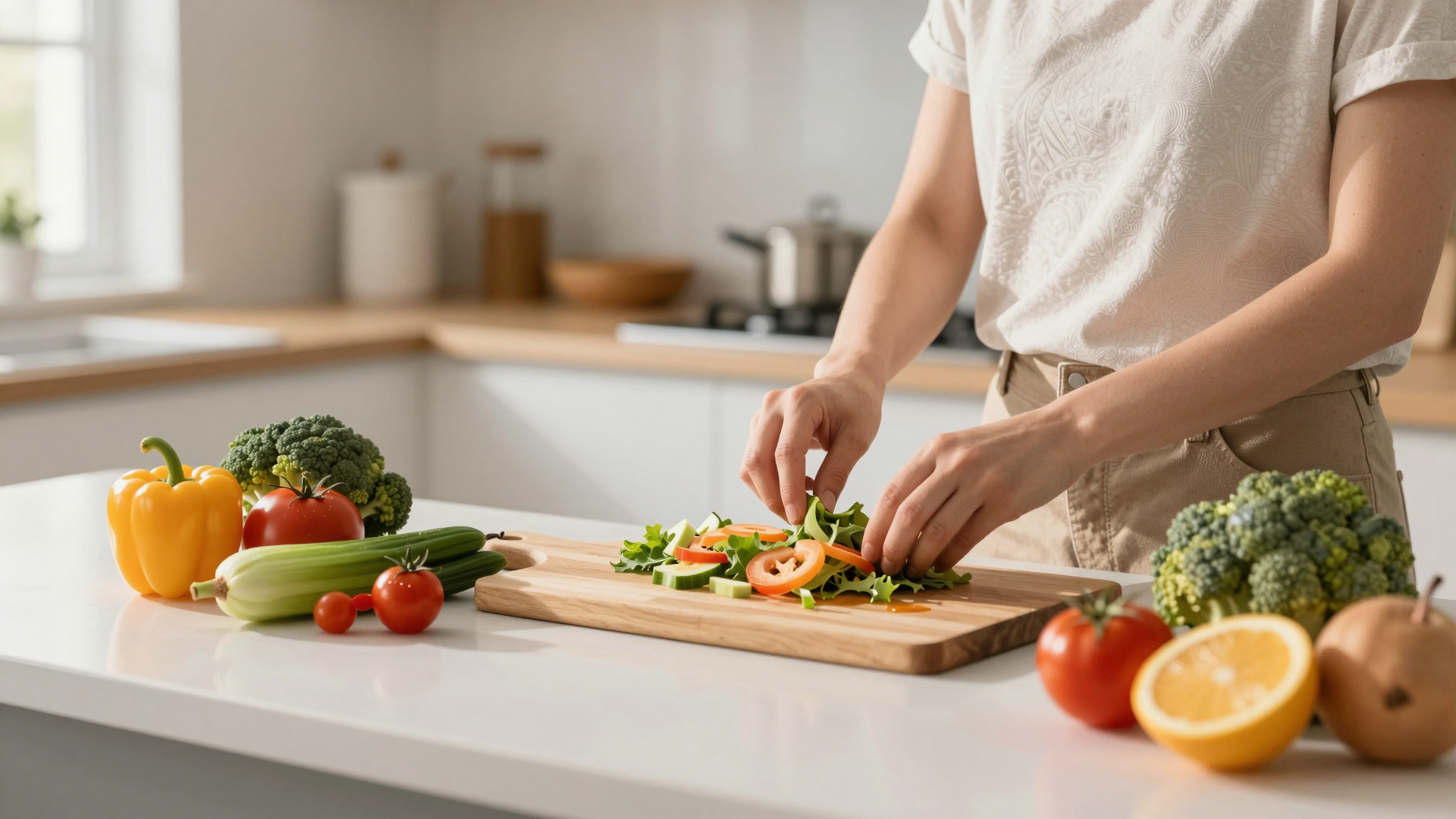
Brain fog, low drive, and “wired-but-tired” stress recovery can look like purely psychological issues—but nutrition-driven iron status is a common, overlooked contributor to cognitive and emotional functioning. Iron supports oxygen delivery, myelin maintenance, and neurotransmitter metabolism that are tightly linked to attention, motivation, and mood regulation (Beard, 2001; McCann & Ames, 2007). Because breakfast sets up your day’s blood sugar, micronutrient intake, and stress physiology, an iron-smart morning meal can be a practical, food-first strategy—especially for people at higher risk of low iron (e.g., menstruating individuals, endurance exercisers, vegetarians/vegans) (Camaschella, 2015; WHO, 2001).
Contents
- 1 Contents
- 1.1 Why iron matters for brain fog, motivation, and stress resilience
- 1.2 Food-first iron at breakfast: what to eat (and what blocks absorption)
- 1.3 Iron-smart breakfast templates (quick, realistic, and evidence-informed)
- 1.4 When food isn’t enough: labs, supplements, and safety for mental wellness
- 1.5 Conclusion
- 1.6 References
Contents
- Why iron matters for brain fog, motivation, and stress resilience
- Food-first iron at breakfast: what to eat (and what blocks absorption)
- Iron-smart breakfast templates (quick, realistic, and evidence-informed)
- When food isn’t enough: labs, supplements, and safety for mental wellness
- Conclusion
- References
Why iron matters for brain fog, motivation, and stress resilience
Iron is essential for brain energy metabolism and oxygen transport via hemoglobin, which directly affects mental stamina and perceived effort (Beard, 2001; McCann & Ames, 2007). Iron is also involved in dopamine signaling and other neurotransmitter pathways that influence motivation, reward processing, and mood stability (Beard, 2001; McCann & Ames, 2007). In children and adolescents, iron deficiency has been associated with cognitive and behavioral impacts, supporting the broader link between iron status and brain function across the lifespan (Lozoff et al., 2006; Lozoff et al., 2000).
For stress recovery, iron status can matter because fatigue and reduced cognitive flexibility can make stress feel “bigger” and harder to regulate. Iron deficiency is common worldwide and can occur even before anemia develops, meaning cognitive symptoms may appear when hemoglobin is still “normal” (Camaschella, 2015; WHO, 2001). If you frequently experience morning grogginess, difficulty focusing, low motivation, or poor workout recovery—especially alongside heavy menstrual bleeding or low dietary iron intake—an iron-smart approach is worth discussing with a clinician (Camaschella, 2015).
Key mental wellness takeaway
Iron doesn’t “treat” anxiety or depression on its own, but low iron can undermine attention, energy, and motivation—foundational capacities that support therapy engagement, coping skills, and daily functioning (Beard, 2001; McCann & Ames, 2007).
Food-first iron at breakfast: what to eat (and what blocks absorption)
There are two types of dietary iron: heme iron (from animal foods) and non-heme iron (from plant foods). Heme iron is generally more bioavailable, while non-heme iron absorption varies more and is strongly influenced by meal components (Hurrell & Egli, 2010). A food-first plan is about stacking the odds in your favor: include iron-rich foods, pair them with absorption enhancers, and reduce common blockers at the same meal (Hurrell & Egli, 2010).
Iron-rich breakfast foods
- Heme iron options: lean beef, lamb, turkey, chicken, sardines (Hurrell & Egli, 2010).
- Non-heme options: fortified cereals, oats, pumpkin seeds, chia, hemp seeds, legumes (e.g., lentils), tofu/tempeh, spinach (Hurrell & Egli, 2010).
Absorption enhancers (especially for plant-based iron)
Vitamin C can meaningfully increase non-heme iron absorption when eaten in the same meal (Cook & Monsen, 1977; Hurrell & Egli, 2010). Practical breakfast-friendly vitamin C pairings include citrus, kiwi, strawberries, bell peppers, or a small glass of orange juice alongside iron-containing foods (Cook & Monsen, 1977).
Common blockers at breakfast (and easy workarounds)
Polyphenols in coffee and tea can reduce non-heme iron absorption when consumed with meals; calcium can also inhibit iron absorption in certain contexts (Hurrell & Egli, 2010). You don’t necessarily need to give them up—just separate them from your iron-focused breakfast when possible (Hurrell & Egli, 2010).
- If you drink coffee/tea: have it 1–2 hours after an iron-forward breakfast to reduce interference (Hurrell & Egli, 2010).
- If you rely on dairy at breakfast: consider moving high-calcium foods (milk, yogurt, calcium-fortified drinks) to a different meal when you’re prioritizing iron intake (Hurrell & Egli, 2010).
- If you eat high-phytate foods (e.g., some grains/legumes): use soaking/sprouting/fermenting when feasible (e.g., sourdough, fermented soy), which can help reduce phytates and improve mineral bioavailability (Hurrell & Egli, 2010).
Iron-smart breakfast templates (quick, realistic, and evidence-informed)
These breakfast options are designed to: (1) include iron-rich foods, (2) add vitamin C to boost non-heme absorption, and (3) minimize inhibitors like coffee/tea and high-calcium foods at the same sitting (Cook & Monsen, 1977; Hurrell & Egli, 2010). If you’re also managing stress reactivity, prioritize a protein-forward breakfast, since higher-protein morning meals have been studied for effects on satiety and appetite regulation—factors that can indirectly support steadier energy and mood throughout the day (Leidy et al., 2013).
- Template 1 (omnivore): Turkey or sardine toast + sliced bell peppers or citrus on the side. (Iron from animal protein; vitamin C from produce) (Hurrell & Egli, 2010; Cook & Monsen, 1977).
- Template 2 (plant-forward): Oatmeal topped with pumpkin seeds + strawberries/kiwi. Optional: stir in a spoon of blackstrap molasses if tolerated. (Non-heme iron + vitamin C pairing) (Hurrell & Egli, 2010; Cook & Monsen, 1977).
- Template 3 (quick bowl): Lentil breakfast bowl (pre-cooked lentils warmed with spices) + chopped tomatoes and lemon juice. (Non-heme iron + vitamin C) (Hurrell & Egli, 2010; Cook & Monsen, 1977).
- Template 4 (tofu scramble): Tofu scramble with spinach + salsa (tomatoes/peppers) and a squeeze of lime. (Non-heme iron + vitamin C) (Hurrell & Egli, 2010; Cook & Monsen, 1977).
- Template 5 (fortified option): Iron-fortified cereal or oats + berries and/or orange slices. Save coffee/tea for later. (Fortification + vitamin C strategy) (Hurrell & Egli, 2010; Cook & Monsen, 1977).
Practical timing tip: If coffee is part of your mental health routine, keep it—just consider “iron first, coffee later” on days you’re focusing on cognition and fatigue. Separating coffee/tea from iron-containing meals can help protect non-heme absorption (Hurrell & Egli, 2010).
When food isn’t enough: labs, supplements, and safety for mental wellness
If brain fog and low energy persist despite dietary improvements—or if you have risk factors like heavy menstrual bleeding, pregnancy, bariatric surgery history, GI conditions, or a long-term low-iron diet—ask a clinician about iron evaluation. Iron deficiency can exist without anemia, and ferritin is commonly used to reflect iron stores, though interpretation should consider inflammation and clinical context (Camaschella, 2015). In children, long-term developmental and cognitive associations with early-life iron deficiency reinforce why timely identification matters (Lozoff et al., 2006; Lozoff et al., 2000).
Supplementation can be effective when deficiency is confirmed, but it should be individualized because excess iron can be harmful and iron supplements can cause GI side effects (Camaschella, 2015). A food-first strategy plus medically guided supplementation (when indicated) is often the most brain-safe path (Camaschella, 2015; WHO, 2001).
Safety note for mental wellness readers: If you’re experiencing severe fatigue, rapid heartbeat, shortness of breath, pica (craving ice/non-food items), or significant mood changes, seek medical evaluation. These symptoms can overlap with anxiety/depression but may also reflect iron deficiency or other medical issues requiring diagnosis (Camaschella, 2015; WHO, 2001).
Conclusion
Iron-smart breakfasts are a practical, food-first way to support mental energy, attention, and motivation by strengthening a core biological foundation of brain function (Beard, 2001; McCann & Ames, 2007). Aim for iron-rich foods, pair non-heme iron with vitamin C, and separate coffee/tea or high-calcium foods from your iron-focused meal to protect absorption (Cook & Monsen, 1977; Hurrell & Egli, 2010). If symptoms persist or you’re at higher risk, lab testing and clinician-guided treatment can be an essential next step for both cognitive performance and emotional resilience (Camaschella, 2015; WHO, 2001).
References
- Beard, J. L. (2001). Iron biology in immune function, muscle metabolism, and neuronal functioning. The Journal of Nutrition, 131(2), 568S–580S. https://doi.org/10.1093/jn/131.2.568S
- Camaschella, C. (2015). Iron-deficiency anemia. New England Journal of Medicine, 372(19), 1832–1843. https://doi.org/10.1056/NEJMra1401038
- Cook, J. D., & Monsen, E. R. (1977). Vitamin C, the common cold, and iron absorption. The American Journal of Clinical Nutrition, 30(2), 235–241. https://doi.org/10.1093/ajcn/30.2.235
- Hurrell, R., & Egli, I. (2010). Iron bioavailability and dietary reference values. The American Journal of Clinical Nutrition, 91(5), 1461S–1467S. https://doi.org/10.3945/ajcn.2010.28674F
- Leidy, H. J., Ortinau, L. C., Douglas, S. M., & Hoertel, H. A. (2013). Beneficial effects of a higher-protein breakfast on appetitive, hormonal, and neural signals controlling food intake regulation in overweight/obese “breakfast-skipping” late-adolescent girls. The American Journal of Clinical Nutrition, 97(4), 677–688. https://doi.org/10.3945/ajcn.112.053116
- Lozoff, B., Jimenez, E., & Smith, J. B. (2006). Double burden of iron deficiency in infancy and low socioeconomic status: A longitudinal analysis of cognitive test scores to 19 years. Archives of Pediatrics & Adolescent Medicine, 160(11), 1108–1113. https://doi.org/10.1001/archpedi.160.11.1108
- Lozoff, B., Jimenez, E., Hagen, J., Mollen, E., & Wolf, A. W. (2000). Poorer behavioral and developmental outcome more than 10 years after treatment for iron deficiency in infancy. Pediatrics, 105(4), e51. https://doi.org/10.1542/peds.105.4.e51
- McCann, J. C., & Ames, B. N. (2007). An overview of evidence for a causal relation between iron deficiency during development and deficits in cognitive or behavioral function. The American Journal of Clinical Nutrition, 85(4), 931–945. https://doi.org/10.1093/ajcn/85.4.931
- World Health Organization. (2001). Iron deficiency anaemia: Assessment, prevention and control: A guide for programme managers. WHO/NHD/01.3, 1–114. https://apps.who.int/iris/handle/10665/66914
Read more evidence-based mental wellness nutrition guides at https://strongerminded.com