
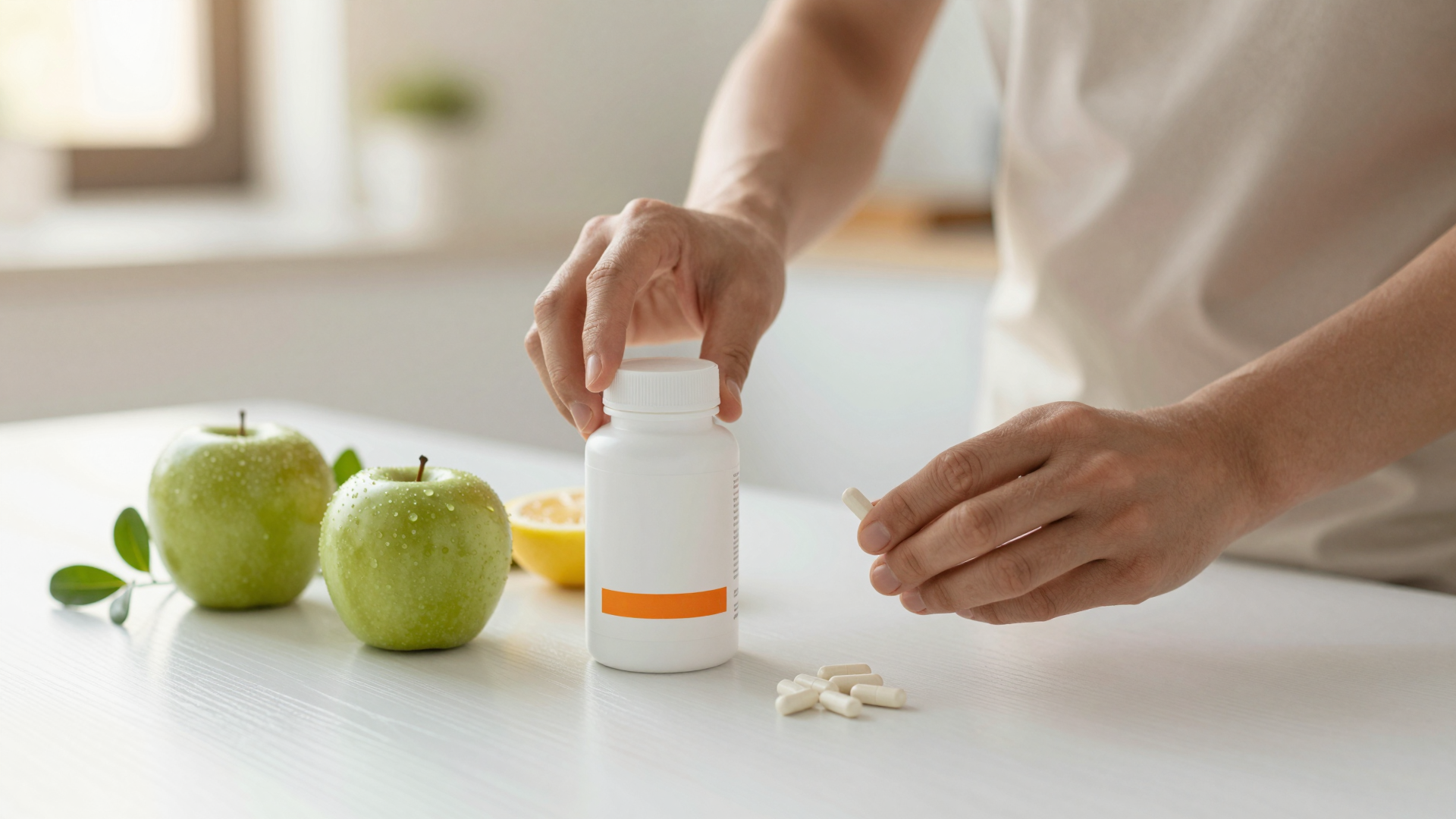
When daylight drops, many people notice a predictable dip in mood, energy, and mental sharpness—often described as “seasonal low mood” plus “cognitive fog.” Vitamin D is one of the most studied nutrients in this space because it is tightly linked to sunlight exposure, and low vitamin D status is common in winter at higher latitudes (Holick, 2007). This article breaks down what the evidence actually says about vitamin D and seasonal mood symptoms, how to dose it realistically, and how to monitor safety—especially if you’re using supplements to support mental wellness (Spedding, 2014; Holick et al., 2011).
Contents
- 1 Contents
- 1.1 Vitamin D, light exposure, and why winter can hit mood and cognition
- 1.2 What the evidence says: vitamin D for seasonal low mood
- 1.3 Vitamin D and “cognitive fog”: what’s known and what isn’t
- 1.4 Optimal dosing: how to supplement vitamin D for mental wellness (without guessing)
- 1.5 Safety monitoring: avoiding excess and recognizing who needs medical supervision
- 1.6 Conclusion
- 1.7 References
Contents
Vitamin D, light exposure, and why winter can hit mood and cognition
Vitamin D is synthesized in skin through UVB exposure, so blood levels commonly decline during winter and in people who get limited sun (Holick, 2007). In the brain, vitamin D receptors and vitamin D–related enzymes are present in multiple regions involved in mood regulation and cognition, supporting biological plausibility for mental health effects (Eyles et al., 2005). Observational research has repeatedly found that lower vitamin D status is associated with higher depressive symptom burden (Anglin et al., 2013). However, association is not the same as causation, which is why supplementation trials and meta-analyses matter when deciding whether vitamin D is likely to help seasonal symptoms.
Seasonal affective disorder (SAD) and subclinical “winter blues” have multiple drivers (circadian rhythm shifts, reduced light input, sleep changes). Vitamin D is best viewed as one potentially modifiable factor—especially when deficiency is present—rather than a stand-alone replacement for evidence-based treatments like bright light therapy and structured psychotherapy (Spedding, 2014).
What the evidence says: vitamin D for seasonal low mood
Meta-analyses of randomized controlled trials (RCTs) suggest vitamin D supplementation can reduce depressive symptoms, with signals that benefits are more likely when baseline vitamin D status is low and when adequate dosing/duration are used (Spedding, 2014; Vellekkatt & Menon, 2019). A large systematic review and dose–response meta-analysis also reported that vitamin D supplementation was associated with reduced depression scores in some populations, though results varied across studies due to differences in baseline deficiency, dosing strategies, and participant characteristics (Li et al., 2014).
For seasonal low mood specifically, the most practical takeaway is: if your vitamin D level is low in late fall/winter, correcting that deficiency is a reasonable, evidence-aligned step in a broader mental wellness plan (Holick et al., 2011; Spedding, 2014). If levels are already sufficient, additional vitamin D is less consistently linked to mood improvement in trials, which is one reason testing can be helpful before you megadose (Vellekkatt & Menon, 2019).
Vitamin D and “cognitive fog”: what’s known and what isn’t
“Cognitive fog” is not a single diagnosis; it often reflects a mix of sleep disruption, low mood, inflammation, and attention/motivation changes. Low vitamin D status has been associated with poorer cognitive performance and higher risk of cognitive impairment in observational studies, but observational links can be confounded by health status, activity level, and sun exposure (Balion et al., 2012). In dementia research, lower vitamin D levels are associated with cognitive impairment and Alzheimer’s disease in meta-analytic work, again without proving causality (Annweiler et al., 2013).
Intervention evidence for cognition is mixed. Some studies suggest correcting deficiency may support aspects of cognitive functioning, while others show limited or no effect, especially if participants are not deficient or the outcome measures aren’t sensitive to change (Balion et al., 2012). Practically: vitamin D is most defensible as a “remove-a-brain-stressor” supplement when deficiency is present, rather than a guaranteed nootropic for focus or memory (Holick et al., 2011; Balion et al., 2012).
Optimal dosing: how to supplement vitamin D for mental wellness (without guessing)
The most clinically useful marker is serum 25-hydroxyvitamin D [25(OH)D], which reflects vitamin D status and is the standard test used in guidelines (Holick et al., 2011). The Endocrine Society’s clinical practice guideline notes that deficiency is commonly defined as <20 ng/mL (50 nmol/L) and insufficiency as 21–29 ng/mL (52.5–72.5 nmol/L), with sufficiency often considered ≥30 ng/mL (≥75 nmol/L) (Holick et al., 2011). This matters because mood benefits in meta-analyses appear more consistent when deficiency is present at baseline (Spedding, 2014; Vellekkatt & Menon, 2019).
A practical, evidence-aligned dosing approach
If you can test: aim to correct deficiency with an evidence-based plan, then recheck. The Endocrine Society guideline describes typical repletion strategies (e.g., higher short-term dosing to correct deficiency) and maintenance dosing afterward, with the exact plan tailored to baseline level, body size, absorption, and clinician judgment (Holick et al., 2011). If you can’t test: conservative daily dosing is generally preferred over intermittent megadoses because steady dosing better supports stable 25(OH)D levels, and very high bolus dosing has been associated with adverse outcomes in some contexts (Sanders et al., 2010).
- Most evidence-based starting point: Get a baseline 25(OH)D test in early winter, especially if you have seasonal symptoms, limited sun exposure, darker skin, higher BMI, malabsorption risk, or you avoid fortified foods (Holick, 2007; Holick et al., 2011).
- If deficient: Use a clinician-guided repletion plan consistent with established guidelines, then re-test to confirm correction (Holick et al., 2011).
- If insufficient: Moderate daily supplementation is often used with follow-up testing to ensure you reach a sufficient range without overshooting (Holick et al., 2011).
- If already sufficient: More is not necessarily better; focus on other evidence-based seasonal strategies (light therapy, sleep timing, exercise, psychotherapy) and use vitamin D as maintenance rather than escalation (Vellekkatt & Menon, 2019).
Vitamin D3 (cholecalciferol) is commonly used and tends to be effective at raising 25(OH)D; vitamin D supplementation reliably increases serum 25(OH)D in trials (Holick et al., 2011). If you’re combining vitamin D with other mental wellness supplements (e.g., omega-3s, magnesium), use a simple tracking system (notes app or supplement tracker) to monitor mood, sleep, and concentration weekly—because multi-supplement stacks can make it hard to know what’s helping (Spedding, 2014).
Safety monitoring: avoiding excess and recognizing who needs medical supervision
Vitamin D is fat-soluble, so chronic high intake can lead to toxicity, typically via hypercalcemia and related complications; this is why “just take more in winter” can backfire (Holick, 2007). The Institute of Medicine report provides dietary reference intakes and describes tolerable upper intake levels (ULs), emphasizing that high intakes over time increase risk and that supplementation should be reasoned, not extreme (Ross et al., 2011).
Who should be extra cautious
- People with kidney disease or history of kidney stones: require clinician oversight due to calcium/phosphate handling and potential hypercalcemia risk (Holick et al., 2011).
- Granulomatous diseases (e.g., sarcoidosis) or certain lymphomas: may have altered vitamin D metabolism and higher hypercalcemia risk (Holick et al., 2011).
- Anyone taking thiazide diuretics or high-dose calcium: should monitor calcium and discuss interactions with a clinician (Ross et al., 2011).
Monitoring can be simple: if you supplement beyond a conservative maintenance dose or you’ve previously been deficient, consider rechecking 25(OH)D after a period of consistent use, and include serum calcium if clinically indicated (Holick et al., 2011). Avoid very large annual or monthly bolus dosing for “convenience” without medical advice; in older adults, an annual high-dose regimen increased falls and fractures in a randomized trial, highlighting that more is not automatically safer (Sanders et al., 2010).
Conclusion
Vitamin D is a legitimate consideration for seasonal low mood and winter cognitive fog primarily when deficiency or insufficiency is present—because low 25(OH)D is common in winter, vitamin D biology is relevant to brain function, and meta-analyses suggest depressive symptom improvements are more likely in low-status groups (Holick, 2007; Eyles et al., 2005; Spedding, 2014). The most effective and safest approach is test-guided supplementation, steady daily dosing rather than extreme boluses, and follow-up monitoring to confirm you’ve corrected deficiency without overshooting (Holick et al., 2011; Ross et al., 2011; Sanders et al., 2010).
References
- Anglin, R. E. S., Samaan, Z., Walter, S. D., & McDonald, S. D. (2013). Vitamin D deficiency and depression in adults: Systematic review and meta-analysis. The British Journal of Psychiatry, 202(2), 100–107. https://doi.org/10.1192/bjp.bp.111.106666
- Annweiler, C., Llewellyn, D. J., & Beauchet, O. (2013). Low serum vitamin D concentrations in Alzheimer’s disease: A systematic review and meta-analysis. Journal of Alzheimer’s Disease, 33(3), 659–674. https://doi.org/10.3233/JAD-2012-121432
- Balion, C., Griffith, L. E., Strifler, L., Henderson, M., Patterson, C., Heckman, G., Llewellyn, D. J., Raina, P., & Papaioannou, A. (2012). Vitamin D, cognition, and dementia: A systematic review and meta-analysis. Neurology, 79(13), 1397–1405. https://doi.org/10.1212/WNL.0b013e31826c197f
- Eyles, D. W., Smith, S., Kinobe, R., Hewison, M., & McGrath, J. J. (2005). Distribution of the vitamin D receptor and 1α-hydroxylase in human brain. Journal of Chemical Neuroanatomy, 29(1), 21–30. https://doi.org/10.1016/j.jchemneu.2004.08.006
- Holick, M. F. (2007). Vitamin D deficiency. The New England Journal of Medicine, 357(3), 266–281. https://doi.org/10.1056/NEJMra070553
- Holick, M. F., Binkley, N. C., Bischoff-Ferrari, H. A., Gordon, C. M., Hanley, D. A., Heaney, R. P., Murad, M. H., & Weaver, C. M. (2011). Evaluation, treatment, and prevention of vitamin D deficiency: An Endocrine Society clinical practice guideline. The Journal of Clinical Endocrinology & Metabolism, 96(7), 1911–1930. https://doi.org/10.1210/jc.2011-0385
- Li, G., Mbuagbaw, L., Samaan, Z., Falavigna, M., Zhang, S., Adachi, J. D., Cheng, J., Papaioannou, A., Thabane, L., & Investigators of the Ontario Osteoporosis Strategy. (2014). Efficacy of vitamin D supplementation in depression in adults: A systematic review. Journal of Clinical Endocrinology & Metabolism, 99(11), 4060–4067. https://doi.org/10.1210/jc.2014-1701
- Ross, A. C., Manson, J. E., Abrams, S. A., Aloia, J. F., Brannon, P. M., Clinton, S. K., Durazo-Arvizu, R. A., Gallagher, J. C., Gallo, R. L., Jones, G., Kovacs, C. S., Mayne, S. T., Rosen, C. J., & Shapses, S. A. (2011). The 2011 report on dietary reference intakes for calcium and vitamin D from the Institute of Medicine: What clinicians need to know. Journal of Clinical Endocrinology & Metabolism, 96(1), 53–58. https://doi.org/10.1210/jc.2010-2704
- Sanders, K. M., Stuart, A. L., Williamson, E. J., Simpson, J. A., Kotowicz, M. A., Young, D., & Nicholson, G. C. (2010). Annual high-dose oral vitamin D and falls and fractures in older women: A randomized controlled trial. JAMA, 303(18), 1815–1822. https://doi.org/10.1001/jama.2010.594
- Spedding, S. (2014). Vitamin D and depression: A systematic review and meta-analysis comparing studies with and without biological flaws. Nutrients, 6(4), 1501–1518. https://doi.org/10.3390/nu6041501
- Vellekkatt, F., & Menon, V. (2019). Efficacy of vitamin D supplementation in major depression: A meta-analysis of randomized controlled trials. Journal of Postgraduate Medicine, 65(2), 74–80. https://doi.org/10.4103/jpgm.JPGM_571_17
Read more at https://strongerminded.com