
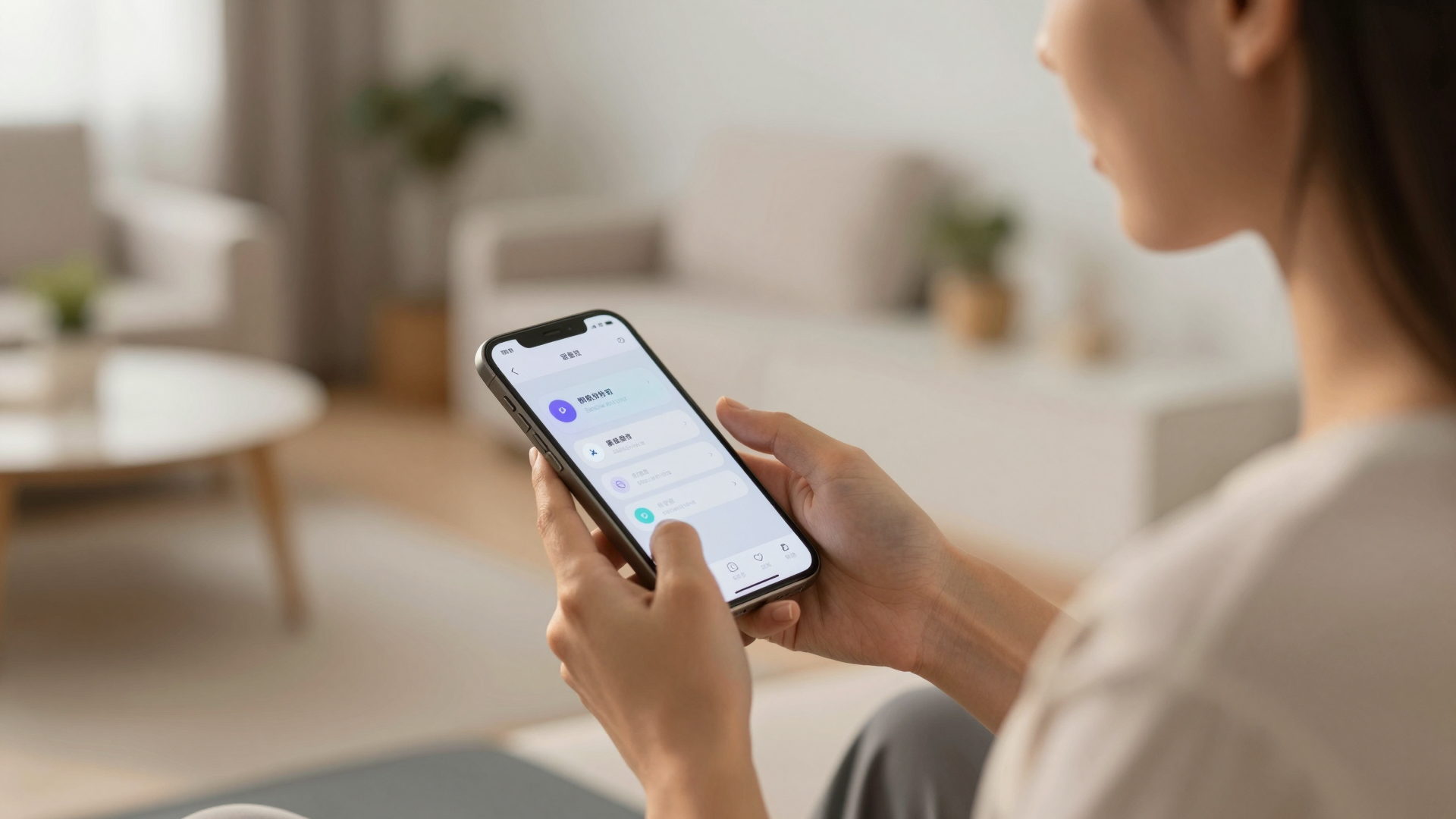
If you’ve ever felt a spike of anxiety after sending a message—then checking your phone repeatedly for a reply—you’re not being “too sensitive.” Messaging platforms can amplify social-evaluative threat (the fear of being ignored, rejected, or judged), a well-known driver of daily anxiety and rumination (Gilbert, 2001; Hofmann, 2007). A simple digital boundary—turning read receipts off—can reduce the “status surveillance” loop that keeps your brain scanning for social danger, especially when you’re already stress-loaded (Brosschot et al., 2006). This 4-minute reset helps lower perceived social threat and supports calmer attention throughout the day.
Contents
Contents
Human attention is biased to detect potential social threat because social exclusion historically carried survival costs; in modern life, that same threat system can be triggered by ambiguous cues like delayed replies (Gilbert, 2001; Hofmann, 2007). Read receipts add a highly salient data point (“they saw it”) that can increase negative interpretation (“they’re ignoring me”), which is a core mechanism in social anxiety and generalized anxiety processes (Hofmann, 2007).
Once the brain flags a possible social threat, many people slide into repetitive negative thinking—worry and rumination—which maintains physiological arousal and prolongs stress even when nothing further happens (Brosschot et al., 2006). Digital environments can intensify this by making social evaluation feel continuous and measurable, and higher social media/digital engagement has been associated with higher anxiety and depression in multiple studies (Primack et al., 2017; Twenge et al., 2018).
Read receipts also increase “checking behavior” (compulsive monitoring for reassurance), which is common across anxiety presentations and can be reinforced because occasional quick replies act like intermittent rewards—one of the strongest schedules for habit formation (Hofmann, 2007). When you turn receipts off, you reduce one of the most anxiety-amplifying cues in the loop: certainty about whether your message has been seen.
The 4-minute “Read Receipts Off” messaging reset (step-by-step)
This reset uses evidence-based principles from cognitive-behavioral models of anxiety: reduce threat cues, reduce reassurance-seeking, and replace ambiguity-driven interpretation with a more neutral default (Hofmann, 2007). It also aligns with digital self-regulation strategies shown to improve well-being by reducing exposure to stress-triggering inputs (Allcott et al., 2020).
Minute 1: Turn off read receipts (and remove “last seen” if available)
Disable read receipts in the messaging apps you use most (e.g., iMessage, WhatsApp, Instagram DMs). If the app allows it, also hide “last active/last seen” because status indicators can function as additional social-evaluative signals (Gilbert, 2001). Reducing these signals is a form of stimulus control—changing the environment to reduce anxiety triggers (Hofmann, 2007).
Minute 2: Set a “response window” rule (2 check-ins per day)
Pick two brief check-in times (for example, once midday and once early evening). Outside those windows, keep notifications limited. Reducing frequent social app checking can lower exposure to stressors and has been linked to improvements in subjective well-being when social media use is intentionally reduced (Allcott et al., 2020).
Minute 3: Install a 10-second cognitive reframe you’ll reuse
When you notice the urge to check, use this script: “I don’t have enough data to conclude rejection. A delayed reply is a normal behavior.” This targets negative interpretation bias, a mechanism implicated in anxiety disorders (Hofmann, 2007). Reframing helps reduce the perceived certainty of threat, which can reduce sustained stress responses driven by worry/rumination (Brosschot et al., 2006).
Minute 4: Replace “checking” with a 60-second downshift tool
Use a brief physiological regulation practice to interrupt arousal. Slow breathing techniques can reduce anxiety by shifting autonomic balance toward parasympathetic activity (Jerath et al., 2015). A simple version: inhale for ~4 seconds, exhale for ~6 seconds, repeat for 6 cycles. The goal is not to “erase” anxiety but to reduce the body’s threat-mode activation so you can return to task focus.
- If your anxiety is social-evaluative: keep receipts off permanently for non-urgent chats to reduce ongoing social-rank monitoring (Gilbert, 2001).
- If your anxiety is worry-driven: pair receipts-off with fixed check-in times to reduce repetitive negative thinking triggers (Brosschot et al., 2006).
- If you feel “compelled” to check: expect urges at first; habit loops weaken when the cue (seen/read status) is removed and checking isn’t repeatedly reinforced (Hofmann, 2007).
Make it stick: boundary language, exceptions, and when to get more support
Clear communication reduces ambiguity, which can reduce anxiety-maintaining interpretation spirals (Hofmann, 2007). Consider telling close contacts: “I keep read receipts off to reduce screen stress—if something is urgent, please call.” This protects relationships while lowering your daily social threat load.
Use exceptions intentionally. If you’re coordinating medical care, time-sensitive work, or caregiving, you can temporarily turn receipts on for that thread only (where possible). The mental health aim is not avoidance of communication, but reduction of unnecessary evaluative signals that increase stress exposure (Allcott et al., 2020; Primack et al., 2017).
If messaging-related anxiety is persistent, causes significant distress, or leads to avoidance of relationships/work, evidence-based treatments like cognitive-behavioral therapy are effective for anxiety disorders and specifically target interpretation bias, reassurance-seeking, and rumination/worry cycles (Hofmann, 2007). Digital tools can be supportive, but they don’t replace individualized clinical care when symptoms are impairing.
Conclusion
Read receipts can intensify social threat sensitivity by adding a “they saw it” signal that fuels negative interpretation and repetitive checking. Turning receipts off, limiting check-ins, using a fast reframe, and pairing it with brief slow breathing is a practical 4-minute reset grounded in established anxiety mechanisms (Brosschot et al., 2006; Hofmann, 2007; Jerath et al., 2015). Small digital boundary changes can meaningfully reduce daily anxiety load—especially when practiced consistently.
References
- Allcott, H., Braghieri, L., Eichmeyer, S., & Gentzkow, M. (2020). The welfare effects of social media. American Economic Review, 110(3), 629–676. https://doi.org/10.1257/aer.20190658
- Brosschot, J. F., Gerin, W., & Thayer, J. F. (2006). The perseverative cognition hypothesis: A review of worry, prolonged stress-related physiological activation, and health. Journal of Psychosomatic Research, 60(2), 113–124. https://doi.org/10.1016/j.jpsychores.2005.06.074
- Gilbert, P. (2001). Evolution and social anxiety: The role of attraction, social competition, and social hierarchies. Psychiatry, 64(4), 361–372. https://doi.org/10.1521/psyc.64.4.361.18621
- Hofmann, S. G. (2007). Cognitive factors that maintain social anxiety disorder: A comprehensive model and its treatment implications. Cognitive Behaviour Therapy, 36(4), 193–209. https://doi.org/10.1080/16506070701421313
- Jerath, R., Edry, J. W., Barnes, V. A., & Jerath, V. (2015). Physiology of long pranayamic breathing: Neural respiratory elements may provide a mechanism that explains how slow deep breathing shifts the autonomic nervous system. Medical Hypotheses, 85(4), 486–496. https://doi.org/10.1016/j.mehy.2015.07.005
- Primack, B. A., Shensa, A., Sidani, J. E., Whaite, E. O., Lin, L. yi, Rosen, D., Colditz, J. B., Radovic, A., & Miller, E. (2017). Social media use and perceived social isolation among young adults in the U.S. American Journal of Preventive Medicine, 53(1), 1–8. https://doi.org/10.1016/j.amepre.2017.01.010
- Twenge, J. M., Joiner, T. E., Rogers, M. L., & Martin, G. N. (2018). Increases in depressive symptoms, suicide-related outcomes, and suicide rates among U.S. adolescents after 2010 and links to increased new media screen time. Clinical Psychological Science, 6(1), 3–17. https://doi.org/10.1177/2167702617723376
Read more evidence-based digital mental wellness tools at https://strongerminded.com