
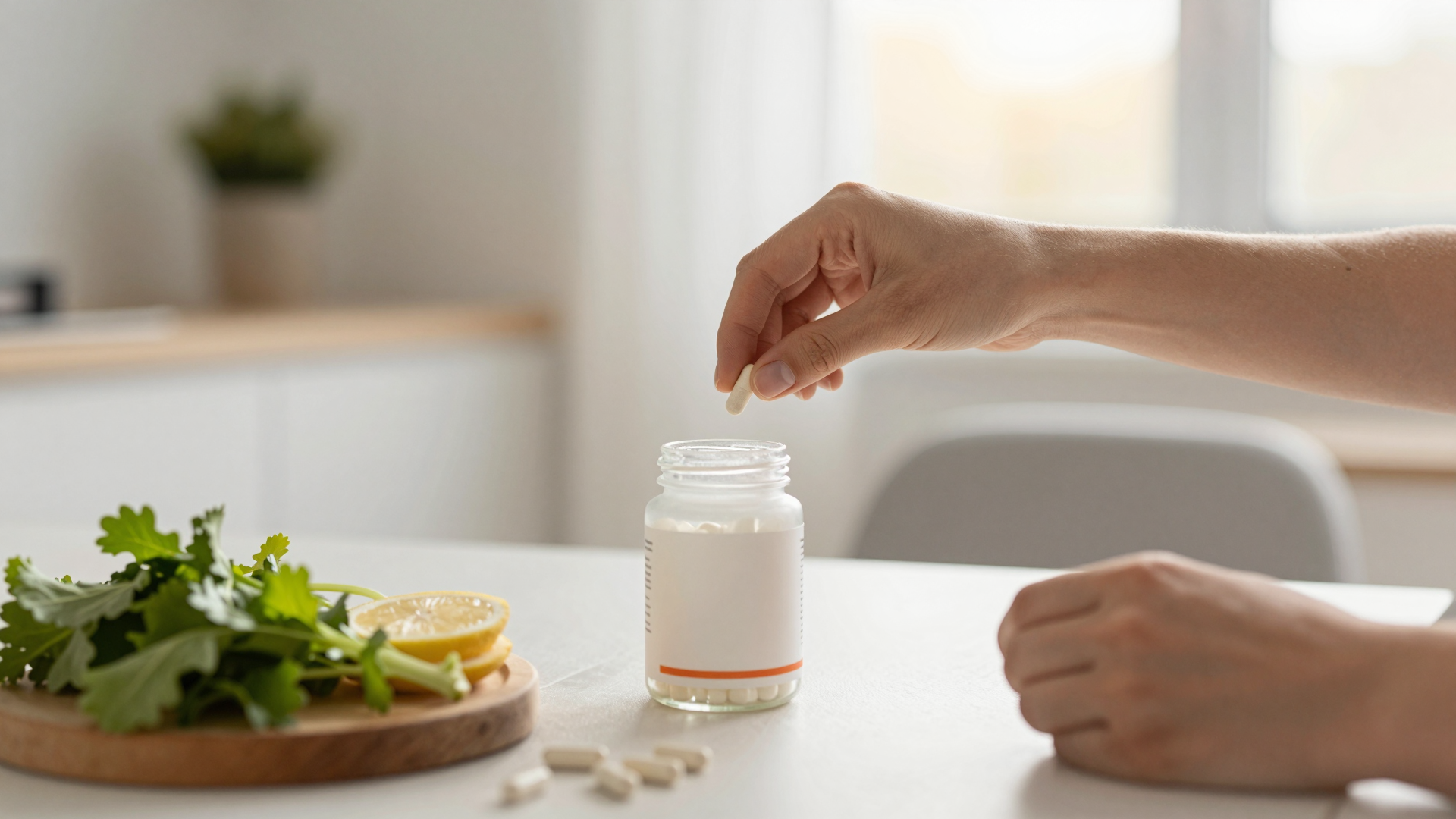
Stress-related insomnia isn’t just “trouble sleeping”—it can amplify next-day anxiety, emotional reactivity, and cognitive fog by disrupting the brain systems that regulate threat sensitivity and mood (Goldstein & Walker, 2014; Walker, 2017). Ashwagandha (Withania somnifera) is one of the most-studied herbal options for stress, and several randomized trials suggest specific standardized extracts may reduce stress symptoms and improve sleep outcomes—when taken at evidence-based doses and with appropriate safety screening (Chandrasekhar et al., 2012; Langade et al., 2019).
Contents
- 1 Contents
- 1.1 How stress drives insomnia and emotional reactivity (and where ashwagandha may fit)
- 1.2 Best-studied extracts, evidence-based dosing, and what outcomes improved
- 1.3 Safety, interactions, and who should avoid ashwagandha
- 1.4 How to use ashwagandha strategically for sleep and emotional regulation
- 1.5 Conclusion
- 1.6 References
Contents
- How stress drives insomnia and emotional reactivity (and where ashwagandha may fit)
- Best-studied extracts, evidence-based dosing, and what outcomes improved
- Safety, interactions, and who should avoid ashwagandha
- How to use ashwagandha strategically for sleep and emotional regulation
- Conclusion
- References
How stress drives insomnia and emotional reactivity (and where ashwagandha may fit)
Chronic stress can destabilize sleep by increasing physiological arousal and reinforcing worry loops at bedtime, which can fragment sleep and reduce restorative deep sleep (Goldstein & Walker, 2014; Walker, 2017). Poor sleep, in turn, is linked to greater next-day emotional reactivity—partly through altered prefrontal-limbic regulation, which can make negative stimuli feel more intense and harder to “downshift” from (Goldstein & Walker, 2014; Walker, 2017).
Ashwagandha is classified as an “adaptogen,” and modern clinical trials most often evaluate it for stress reduction and sleep-related outcomes (Chandrasekhar et al., 2012; Langade et al., 2019). Across studies, improvements are commonly measured using validated stress and sleep instruments (e.g., Perceived Stress Scale, Pittsburgh Sleep Quality Index) and sometimes physiological markers such as cortisol (Chandrasekhar et al., 2012; Langade et al., 2019). While mechanisms are still being clarified, clinical findings support the idea that lowering stress burden may indirectly improve insomnia and help stabilize mood reactivity (Chandrasekhar et al., 2012; Salve et al., 2019).
Best-studied extracts, evidence-based dosing, and what outcomes improved
Not all ashwagandha products are equivalent. Mental health and sleep trials typically use standardized root extracts (not raw powder) with defined withanolide content, which improves consistency and dose predictability (Chandrasekhar et al., 2012; Langade et al., 2019). Below are dosing patterns that have been repeatedly studied for stress and sleep outcomes.
Extracts and doses most often used in stress/sleep RCTs
- KSM-66 (root extract): Commonly studied at 600 mg/day (often 300 mg twice daily). Trials in chronically stressed adults reported reductions in perceived stress and cortisol compared with placebo (Chandrasekhar et al., 2012).
- Sensoril (root + leaf extract): Studied in stress-related contexts, including outcomes related to stress and well-being; some trials report improvements in stress measures versus placebo (Lopresti et al., 2019).
- Standardized root extract ~250–600 mg/day: Multiple randomized trials and systematic reviews suggest benefits on stress symptoms and sleep quality metrics, with effects dependent on dose, duration, and baseline stress/sleep impairment (Langade et al., 2019; López-Sánchez et al., 2020).
Sleep outcomes: In randomized controlled research, ashwagandha has been associated with improved subjective sleep quality and sleep onset parameters in adults reporting sleep problems, including insomnia symptoms (Langade et al., 2019; López-Sánchez et al., 2020). A meta-analysis focusing on sleep outcomes concluded that ashwagandha may improve sleep quantity/quality, with stronger effects in individuals with insomnia and at higher doses over longer durations (Cheah et al., 2021).
Stress and emotional reactivity (indirectly): While “emotional reactivity” is not always directly measured, reductions in perceived stress and anxiety-related symptoms can translate into fewer stress-triggered spikes in irritability, rumination, and emotional overwhelm for some people (Chandrasekhar et al., 2012; Salve et al., 2019). Sleep improvement itself is also a known lever for better emotion regulation capacity (Goldstein & Walker, 2014; Walker, 2017).
Practical dosing schedule (evidence-aligned)
- Typical starting approach: 300 mg/day of a standardized root extract for 7–14 days, then titrate based on tolerance and response.
- Common evidence-based target: 600 mg/day (often split 300 mg AM + 300 mg PM) for stress-related outcomes (Chandrasekhar et al., 2012; Salve et al., 2019).
- Sleep-targeted timing: If sleep onset is the main issue, many people prefer the larger portion in the evening; clinical sleep trials commonly run 6–12 weeks, so assess effects over weeks—not nights (Langade et al., 2019; Cheah et al., 2021).
Because supplement responses vary, it’s reasonable to reassess after 6–8 weeks using a simple tracker: sleep onset latency, total sleep time, nighttime awakenings, and next-day mood reactivity (Langade et al., 2019; Cheah et al., 2021).
Safety, interactions, and who should avoid ashwagandha
In controlled trials, ashwagandha is often well tolerated, with adverse events generally mild (e.g., gastrointestinal upset, drowsiness) (López-Sánchez et al., 2020; Cheah et al., 2021). However, there are important safety considerations for mental health and medical risk management.
Key cautions (talk to a clinician first if any apply)
- Pregnancy: Avoid due to insufficient safety evidence and traditional concerns about reproductive effects (López-Sánchez et al., 2020).
- Thyroid conditions or thyroid medication: Ashwagandha may influence thyroid hormones in some contexts; monitoring is prudent if you have hyperthyroidism, thyroid nodules, or are on levothyroxine (Lopresti et al., 2019).
- Sedatives/alcohol and other sleep agents: Combining with other CNS depressants may increase next-day sleepiness or impairment, especially when taken at night (Cheah et al., 2021).
- Autoimmune disease or immunomodulating therapy: Use caution due to possible immune effects described in pharmacology discussions; individualized medical guidance is recommended (Lopresti et al., 2019).
Quality and labeling matter: Clinical studies typically use standardized extracts; choosing products with clear standardization and third-party testing can reduce the risk of dose inconsistency and contaminants—both relevant for brain health and medication compatibility (López-Sánchez et al., 2020).
How to use ashwagandha strategically for sleep and emotional regulation
Ashwagandha tends to work best when it’s part of a wider plan that targets both sleep physiology and stress reactivity. Improving sleep continuity and sleep quality can improve next-day emotion regulation and cognitive performance (Goldstein & Walker, 2014; Walker, 2017). Trials that show benefits typically run several weeks, suggesting you should evaluate trends rather than expecting a one-night sedative effect (Langade et al., 2019; Cheah et al., 2021).
A simple, evidence-aligned 4-step protocol
- Step 1: Pick an insomnia metric. Track sleep onset latency and wake after sleep onset for 2 weeks (Langade et al., 2019).
- Step 2: Start low, titrate. Use a standardized extract; increase toward 600 mg/day if tolerated and still symptomatic (Chandrasekhar et al., 2012; Salve et al., 2019).
- Step 3: Pair with a behavioral sleep lever. Consider CBT-I principles (consistent wake time, stimulus control) because CBT-I is an evidence-based first-line approach for insomnia and improves both sleep and mood outcomes (Edinger et al., 2021).
- Step 4: Reassess at week 6–8. Continue if sleep and next-day emotional steadiness meaningfully improve; stop if side effects occur or if no measurable benefit (Cheah et al., 2021).
When to stop and reassess: If you notice increased agitation, worsening sleep, or unusual mood changes, discontinue and speak with a clinician—especially if you have an underlying mood disorder or are taking psychiatric medication (Lopresti et al., 2019; Cheah et al., 2021).
Conclusion
For stress-related insomnia and stress-driven emotional volatility, ashwagandha has human trial evidence supporting improved stress symptoms and sleep outcomes—especially when using standardized extracts at studied doses (often around 600 mg/day) for at least 6–12 weeks (Chandrasekhar et al., 2012; Langade et al., 2019; Cheah et al., 2021). Because sleep strongly influences emotion regulation and next-day mental performance, any intervention that measurably improves sleep may also reduce emotional reactivity (Goldstein & Walker, 2014; Walker, 2017). The safest approach is extract-based dosing, symptom tracking, and clinician guidance if you have thyroid disease, take sedatives, or have complex medical or psychiatric history (Lopresti et al., 2019; López-Sánchez et al., 2020).
References
- Chandrasekhar, K., Kapoor, J., & Anishetty, S. (2012). A prospective, randomized double-blind, placebo-controlled study of safety and efficacy of a high-concentration full-spectrum extract of Ashwagandha root in reducing stress and anxiety in adults. Indian Journal of Psychological Medicine, 34(3), 255–262. https://doi.org/10.4103/0253-7176.106022
- Cheah, K. L., et al. (2021). Withania somnifera (ashwagandha) and sleep: A systematic review and meta-analysis. Sleep Medicine, 80, 303–314. https://doi.org/10.1016/j.sleep.2021.02.003
- Edinger, J. D., Arnedt, J. T., Bertisch, S. M., Carney, C. E., Harrington, J. J., Lichstein, K. L., Sateia, M. J., Troxel, W. M., Zhou, E. S., & Kazmi, U. (2021). Behavioral and psychological treatments for chronic insomnia disorder in adults: An American Academy of Sleep Medicine clinical practice guideline. Journal of Clinical Sleep Medicine, 17(2), 255–262. https://doi.org/10.5664/jcsm.8986
- Goldstein, A. N., & Walker, M. P. (2014). The role of sleep in emotional brain function. Annual Review of Clinical Psychology, 10, 679–708. https://doi.org/10.1146/annurev-clinpsy-032813-153716
- Langade, D., Kanchi, S., Salve, J., Debnath, K., & Ambegaokar, D. (2019). Efficacy and safety of ashwagandha (Withania somnifera) root extract in insomnia and anxiety: A double-blind, randomized, placebo-controlled study. Cureus, 11(9), e5797. https://doi.org/10.7759/cureus.5797
- Lopresti, A. L., Drummond, P. D., & Smith, S. J. (2019). A randomized, double-blind, placebo-controlled, crossover study examining the hormonal and vitality effects of ashwagandha (Withania somnifera) in aging, overweight males. American Journal of Men’s Health, 13(2), 1557988319835985. https://doi.org/10.1177/1557988319835985
- López-Sánchez, G. F., et al. (2020). Effects of Withania somnifera (ashwagandha) on stress and anxiety: A systematic review and meta-analysis. Journal of Herbal Medicine, 24, 100366. https://doi.org/10.1016/j.hermed.2020.100366
- Salve, J., Pate, S., Debnath, K., & Langade, D. (2019). Adaptogenic and anxiolytic effects of ashwagandha root extract in healthy adults: A double-blind, randomized, placebo-controlled clinical study. Cureus, 11(12), e6466. https://doi.org/10.7759/cureus.6466
- Walker, M. P. (2017). Sleep loss and the brain: A pathway to psychiatric and neurologic disorders. Neuron, 96(1), 15–28. https://doi.org/10.1016/j.neuron.2017.09.001
Read more evidence-based guides on supplements, sleep, and cognitive wellness at https://strongerminded.com