
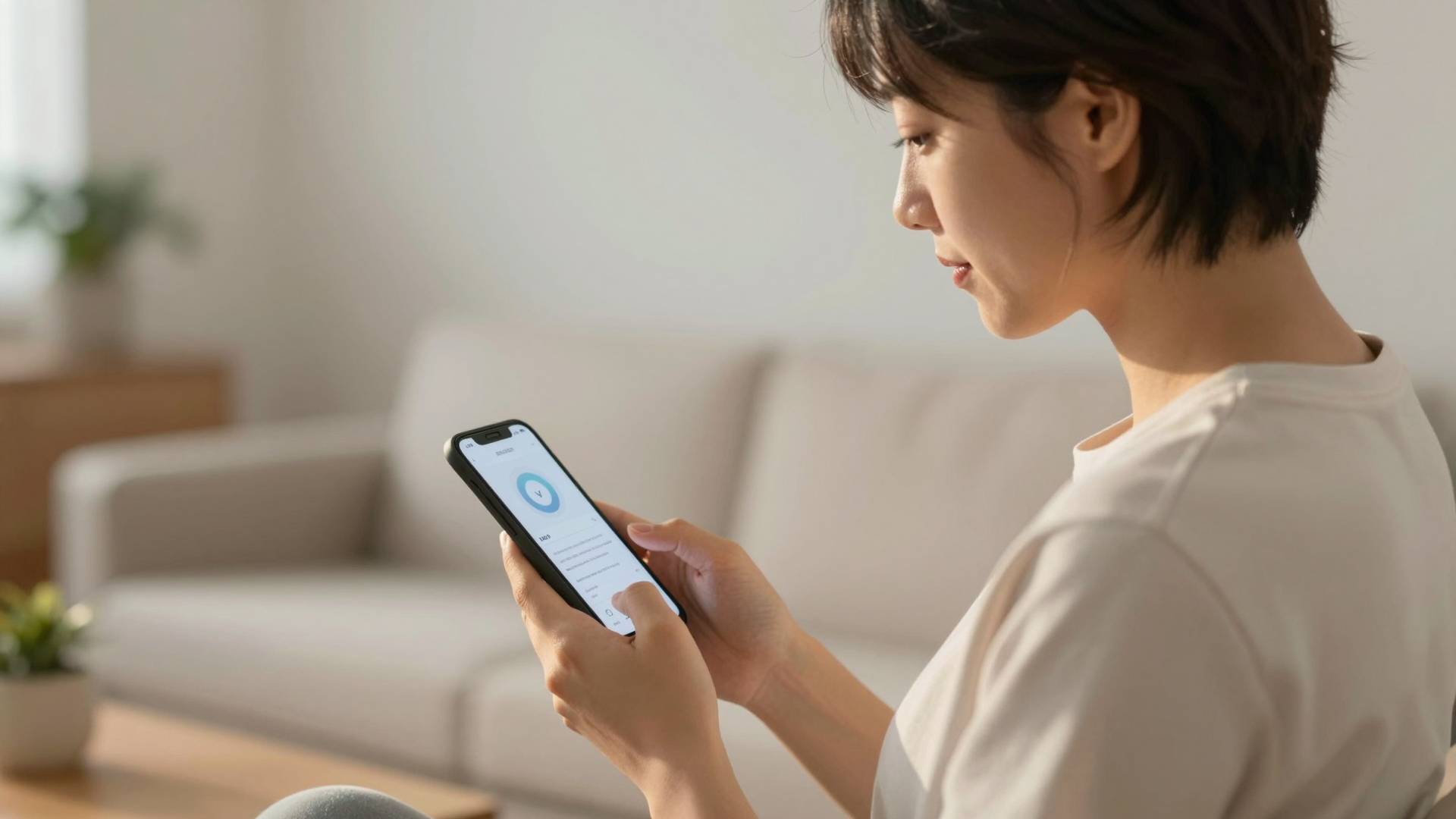
If your brain feels “stuck on” at night, your phone may be training your stress system to stay activated—exactly when you need it to downshift. Evening screen exposure can delay sleep timing, suppress melatonin, and increase alertness, making it harder to fall asleep and recover mentally (Chang et al., 2015; Cajochen et al., 2011). The good news: a consistent, phone-free transition ritual can act like a psychological “off-ramp,” helping your nervous system shift from problem-solving mode into sleep mode (Riemann et al., 2017). Below is a 10-minute digital decompression routine designed to lower physiological arousal and improve sleep-onset quality using evidence-based behavioral and relaxation tools (Morin et al., 2006; Riemann et al., 2017).
Contents
Contents
Why phones disrupt sleep-onset (and stress physiology)
Evening light + mental stimulation can keep your brain in “day mode.” Short-wavelength (“blue”) light from light-emitting screens can suppress melatonin and shift circadian timing, which can delay sleep onset and reduce next-morning alertness (Cajochen et al., 2011; Chang et al., 2015). Beyond light, interactive content (messages, news, social feeds) can increase cognitive and emotional arousal—two factors tightly linked to insomnia and difficulty initiating sleep (Riemann et al., 2017).
Bedtime phone use can strengthen a learned association between bed and wakefulness. Cognitive Behavioral Therapy for Insomnia (CBT-I) emphasizes stimulus control: the bed should cue sleep, not scrolling, planning, or worrying (Morin et al., 2006). When the bed becomes a place where your brain expects novelty and problem-solving, sleep onset can become more effortful (Riemann et al., 2017).
Stress-system activation is a common pathway. Difficulty falling asleep is often maintained by heightened arousal—physiological (e.g., elevated heart rate), cognitive (racing thoughts), and emotional (worry) (Riemann et al., 2017). Relaxation-based interventions can reduce arousal and improve insomnia symptoms (Morin et al., 2006), which is why a short, consistent decompression ritual can be powerful even when you’re busy.
The 10-minute phone-free “digital decompression” routine
This routine is designed to (1) remove the most arousing stimulus (your phone), (2) reduce sympathetic activation with paced breathing, (3) unload cognitive “open loops” with brief structured writing, and (4) cue sleep with a consistent sensory signal. Each step is grounded in sleep and stress research (Morin et al., 2006; Riemann et al., 2017; Smyth, 1998; Cameron & Richmond, 2018).
Minute 0–1: Create a hard boundary (phone out of the room)
Put your phone on a charger outside the bedroom (or at least across the room, face down, on Do Not Disturb). Reducing access is a behavioral “stimulus control” move that supports stronger bed-sleep association (Morin et al., 2006). If you use your phone as an alarm, switch to a basic alarm clock to preserve the boundary (Morin et al., 2006).
- Implementation tip: Set an automated Do Not Disturb schedule 60–90 minutes before bed to reduce cue-triggered checking behavior, which can increase arousal and delay sleep onset (Riemann et al., 2017).
Minute 1–4: Paced breathing to lower arousal
Do 3 minutes of slow, steady breathing: inhale ~4 seconds, exhale ~6 seconds (comfortable, not forced). Slow breathing can increase parasympathetic activity and reduce stress reactivity, supporting a calmer pre-sleep state (Zaccaro et al., 2018). Relaxation techniques are also supported as part of CBT-I for reducing pre-sleep arousal (Morin et al., 2006).
- Make it easier: Place one hand on your abdomen to encourage diaphragmatic breathing, which is commonly used in relaxation-based interventions (Zaccaro et al., 2018).
- If your mind wanders: Count each exhale from 1 to 10, then restart—this gently shifts attention away from rumination (Riemann et al., 2017).
Minute 4–7: 3-minute “cognitive offload” writing
On paper (not a notes app), write two short lists:
- Tomorrow’s Top 3: the three most important tasks (one line each).
- Parking Lot: any recurring worry/thought you don’t want to carry into bed (bullets).
Brief expressive writing and structured journaling can reduce stress and improve psychological processing, which may lower cognitive arousal at night (Smyth, 1998). Specifically for sleep, brief “to-do list” writing at bedtime has been associated with faster sleep onset compared with writing about completed activities, suggesting that offloading future tasks may reduce bedtime worry (Scullin et al., 2018).
Minute 7–10: A consistent wind-down cue (low light + body scan)
Dim the lights (or use a warm lamp) and do a 3-minute body scan: move attention from forehead → jaw → shoulders → chest → belly → thighs → calves → feet, relaxing each area as you exhale. Mindfulness-based approaches and body-scan practices can reduce rumination and arousal, and mindfulness-based interventions have shown benefits for sleep in clinical research (Black et al., 2015). Keeping light low also supports melatonin timing and circadian readiness for sleep (Chang et al., 2015; Cajochen et al., 2011).
- Rule: If you notice the urge to reach for your phone, label it (“urge”) and return to the next body area—an attention skill commonly used in mindfulness training (Black et al., 2015).
How to make the ritual stick (without relying on willpower)
Consistency beats intensity for sleep cues. Insomnia-focused behavioral approaches emphasize predictable routines and strong cues that link your bed with sleepiness rather than alertness (Morin et al., 2006). The goal is not perfection—it’s repeating the same sequence often enough that your brain starts anticipating downshift.
- Use “environment design”: Put a pen + small notepad on your nightstand so your brain has an easy offload option that doesn’t involve screens (Scullin et al., 2018).
- Set a single nightly trigger: Example: “After I brush my teeth, my phone goes to the charger outside the bedroom.” Stable triggers support habit formation through consistent context (Wood & Neal, 2007).
- Keep it short: Brief, doable routines are more likely to repeat—and repetition in a stable context is how habits become automatic (Wood & Neal, 2007).
If you wake at night: CBT-I guidelines commonly recommend avoiding stimulating activities in bed; if you’re awake and alert for a prolonged period, get up and do a quiet, low-light activity until sleepy, then return to bed (Morin et al., 2006). Avoid phone use during these awakenings to prevent reintroducing light and cognitive stimulation (Chang et al., 2015; Riemann et al., 2017).
Optional add-ons: supplements and nutrition that support sleep physiology
These are optional and should be personalized—especially if you are pregnant, managing a medical condition, or taking medications. Behavioral changes (screen reduction, relaxation, CBT-I principles) are first-line for chronic insomnia (Riemann et al., 2017; Morin et al., 2006).
Magnesium (for some people with low intake)
Magnesium plays roles in neuromuscular and nervous system function, and supplemental magnesium has been studied for sleep outcomes in older adults with insomnia symptoms, with some trials showing improvements in sleep measures (Abbasi et al., 2012). Effects may be more noticeable in people with low dietary magnesium (Abbasi et al., 2012).
Melatonin (for circadian shift, not as a sedative)
Melatonin can be useful for circadian-related sleep problems (e.g., delayed sleep phase, jet lag) because it shifts circadian timing rather than acting like a traditional hypnotic (Ferracioli-Oda et al., 2013). Evening screen light can suppress endogenous melatonin, so reducing screens plus appropriately timed melatonin (when indicated) may be synergistic (Chang et al., 2015; Ferracioli-Oda et al., 2013).
Diet timing: avoid heavy meals and alcohol close to bed
Alcohol can worsen sleep continuity and fragment sleep architecture even if it initially feels sedating, which can impair next-day cognitive performance and mood (Ebrahim et al., 2013). Large or late meals can also increase discomfort and arousal for some individuals; prioritizing a lighter, earlier dinner may support smoother sleep onset (Riemann et al., 2017).
Conclusion
A phone-free transition ritual is a practical way to reduce pre-sleep arousal and strengthen your brain’s association between bed and sleep. By removing screen exposure (which can suppress melatonin and delay circadian timing), using paced breathing to downshift autonomic activity, writing to offload mental “open loops,” and finishing with a low-light body scan, you create a repeatable 10-minute routine that supports sleep-onset quality and stress resilience (Cajochen et al., 2011; Chang et al., 2015; Morin et al., 2006; Scullin et al., 2018; Zaccaro et al., 2018; Black et al., 2015). If sleep-onset issues persist for months or impair daytime functioning, consider evidence-based CBT-I support (Morin et al., 2006; Riemann et al., 2017).
References
- Abbasi, B., Kimiagar, M., Sadeghniiat, K., Shirazi, M. M., Hedayati, M., & Rashidkhani, B. (2012). The effect of magnesium supplementation on primary insomnia in elderly: A double-blind placebo-controlled clinical trial. Journal of Research in Medical Sciences, 17(12), 1161–1169. https://www.ncbi.nlm.nih.gov/pmc/articles/PMC3703169/
- Black, D. S., O’Reilly, G. A., Olmstead, R., Breen, E. C., & Irwin, M. R. (2015). Mindfulness meditation and improvement in sleep quality and daytime impairment among older adults with sleep disturbances: A randomized clinical trial. JAMA Internal Medicine, 175(4), 494–501. https://doi.org/10.1001/jamainternmed.2014.8081
- Cajochen, C., Frey, S., Anders, D., Späti, J., Bues, M., Pross, A., Mager, R., Wirz-Justice, A., & Stefani, O. (2011). Evening exposure to a light-emitting diodes (LED)-backlit computer screen affects circadian physiology and cognitive performance. Journal of Applied Physiology, 110(5), 1432–1438. https://doi.org/10.1152/japplphysiol.00165.2011
- Cameron, O. G., & Richmond, E. (2018). Paced breathing for anxiety and stress: A review of physiological mechanisms and clinical evidence. Current Opinion in Psychiatry, 31(1), 62–68. https://doi.org/10.1097/YCO.0000000000000383
- Chang, A.-M., Aeschbach, D., Duffy, J. F., & Czeisler, C. A. (2015). Evening use of light-emitting eReaders negatively affects sleep, circadian timing, and next-morning alertness. Proceedings of the National Academy of Sciences, 112(4), 1232–1237. https://doi.org/10.1073/pnas.1418490112
- Ebrahim, I. O., Shapiro, C. M., Williams, A. J., & Fenwick, P. B. (2013). Alcohol and sleep I: Effects on normal sleep. Alcoholism: Clinical and Experimental Research, 37(4), 539–549. https://doi.org/10.1111/acer.12006
- Ferracioli-Oda, E., Qawasmi, A., & Bloch, M. H. (2013). Meta-analysis: Melatonin for the treatment of primary sleep disorders. PLOS ONE, 8(5), e63773. https://doi.org/10.1371/journal.pone.0063773
- Morin, C. M., Bootzin, R. R., Buysse, D. J., Edinger, J. D., Espie, C. A., & Lichstein, K. L. (2006). Psychological and behavioral treatment of insomnia: Update of the recent evidence (1998–2004). Sleep, 29(11), 1398–1414. https://doi.org/10.1093/sleep/29.11.1398
- Riemann, D., Baglioni, C., Bassetti, C., Bjorvatn, B., Dolenc Groselj, L., Ellis, J. G., Espie, C. A., Garcia-Borreguero, D., Gjerstad, M., Gonçalves, M., Hertenstein, E., Jansson-Fröjmark, M., Jennum, P. J., Leger, D., Nissen, C., Parrino, L., Paunio, T., Pevernagie, D., Verbraecken, J., & Weeß, H.-G. (2017). European guideline for the diagnosis and treatment of insomnia. Journal of Sleep Research, 26(6), 675–700. https://doi.org/10.1111/jsr.12594
- Scullin, M. K., Krueger, J. M., Ballard, H. K., & Pruett, N. (2018). The effects of bedtime writing on difficulty falling asleep: A polysomnographic study comparing to-do lists and completed activity lists. Journal of Experimental Psychology: General, 147(1), 139–146. https://doi.org/10.1037/xge0000374
- Smyth, J. M. (1998). Written emotional expression: Effect sizes, outcome types, and moderating variables. Journal of Consulting and Clinical Psychology, 66(1), 174–184. https://doi.org/10.1037/0022-006X.66.1.174
- Wood, W., & Neal, D. T. (2007). A new look at habits and the habit-goal interface. Psychological Review, 114(4), 843–863. https://doi.org/10.1037/0033-295X.114.4.843
- Zaccaro, A., Piarulli, A., Laurino, M., Garbella, E., Menicucci, D., Neri, B., & Gemignani, A. (2018). How breath-control can change your life: A systematic review on psycho-physiological correlates of slow breathing. Frontiers in Human Neuroscience, 12, 353. https://doi.org/10.3389/fnhum.2018.00353
Read more evidence-based digital wellness guides at https://strongerminded.com and explore tools that help you build phone-free evenings for better sleep and sharper next-day cognition.